


Adviсes • 25 August, 2026
What to do if your flight is delayed or cancelled
A flight delay can disrupt even the most carefully planned journey. A few extra hours at the airport may affect a connecting flight, hotel check-in, a scheduled meeting, or the rest of your itinerary. Even more questions arise when a flight is cancelled and a passenger needs to understand how to continue the journey.
In this situation, the first priority is to obtain up-to-date information and determine what to do next. Schedule changes can occur for many reasons, and not all of them can be predicted in advance. In this article, the Centrum Air team explains why aircraft sometimes depart later than scheduled, why flights may be cancelled, and what passengers should do in each situation.
Why a Flight May Be Delayed
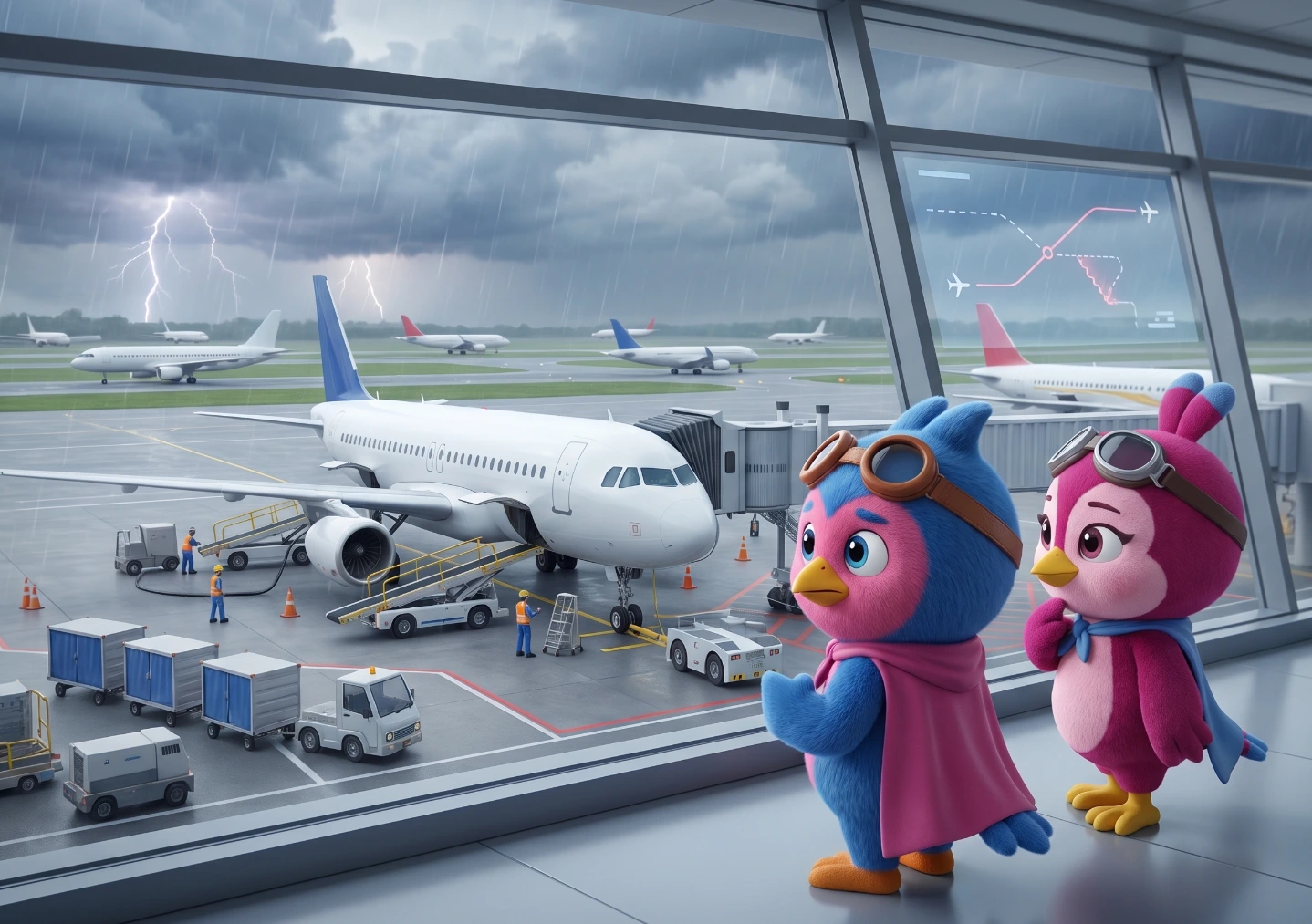
An aircraft's departure depends on more than the published timetable. Before take-off, many factors must be considered at the same time, including weather conditions, the technical status of the aircraft, airport operations, airspace congestion, and other operational circumstances.
Weather is one of the most visible causes of delays. Strong winds, thunderstorms, fog, heavy snow, or other adverse conditions can restrict airport operations. At the same time, good weather at the departure airport does not necessarily mean that conditions are suitable for the flight. Weather along the route and at the destination airport also matters.
Departure time may also be affected by:
- Technical reasons. The aircraft's condition is carefully checked before every flight. If an additional inspection or rectification is required, departure may be postponed;
- Air traffic restrictions. Air traffic control services regulate aircraft movements and, during busy periods, may sequence take-offs and landings;
- Late arrival of the aircraft. An aircraft often operates several flights during the day. If the previous sector finishes later than scheduled, this may affect the following departure;
- Airport operational factors. Temporary restrictions may be related to runway conditions, ground handling, or other operational circumstances;
- Route restrictions. A flight route may need to be changed because of temporarily closed airspace or other external factors.
For this reason, a delay does not always mean that a problem arose immediately before boarding. The cause may have developed much earlier or may be related to another airport altogether.
What to Do If Your Flight Is Delayed

The first thing to do is check the current flight status. The boarding pass reflects the original schedule, but once changes have been announced, you should rely on the latest official information.
Monitor the airport information displays and announcements. You can also subscribe to and check the airline's Telegram channel at https://t.me/centrumair_speaking, where information about delays is published. If different sources show conflicting information, clarify the status with Centrum Air representatives or airport staff.
After a delay is announced, it is best to proceed step by step:
- Confirm the updated flight status. Find out the estimated departure time and continue checking for updates. The length of the delay may change as circumstances develop;
- Do not leave the airport unless necessary. Even during a long delay, the schedule can change again. If you decide to leave the terminal, first confirm whether you will be able to complete the required procedures again and what time you must return;
- Monitor the boarding gate number. A gate may change after a schedule disruption, so do not rely only on the gate shown on your original boarding pass;
- Ask what assistance is available. The services provided may depend on the length of the wait, the reason for the schedule change, the route, and the applicable conditions of carriage;
- Keep your travel documents. Your boarding pass, e-ticket, notifications about the schedule change, and other records may be needed later if you have to confirm the circumstances of the journey.
If the delay becomes lengthy, assess in advance how it may affect the rest of your travel plans.
What Connecting Passengers Should Do
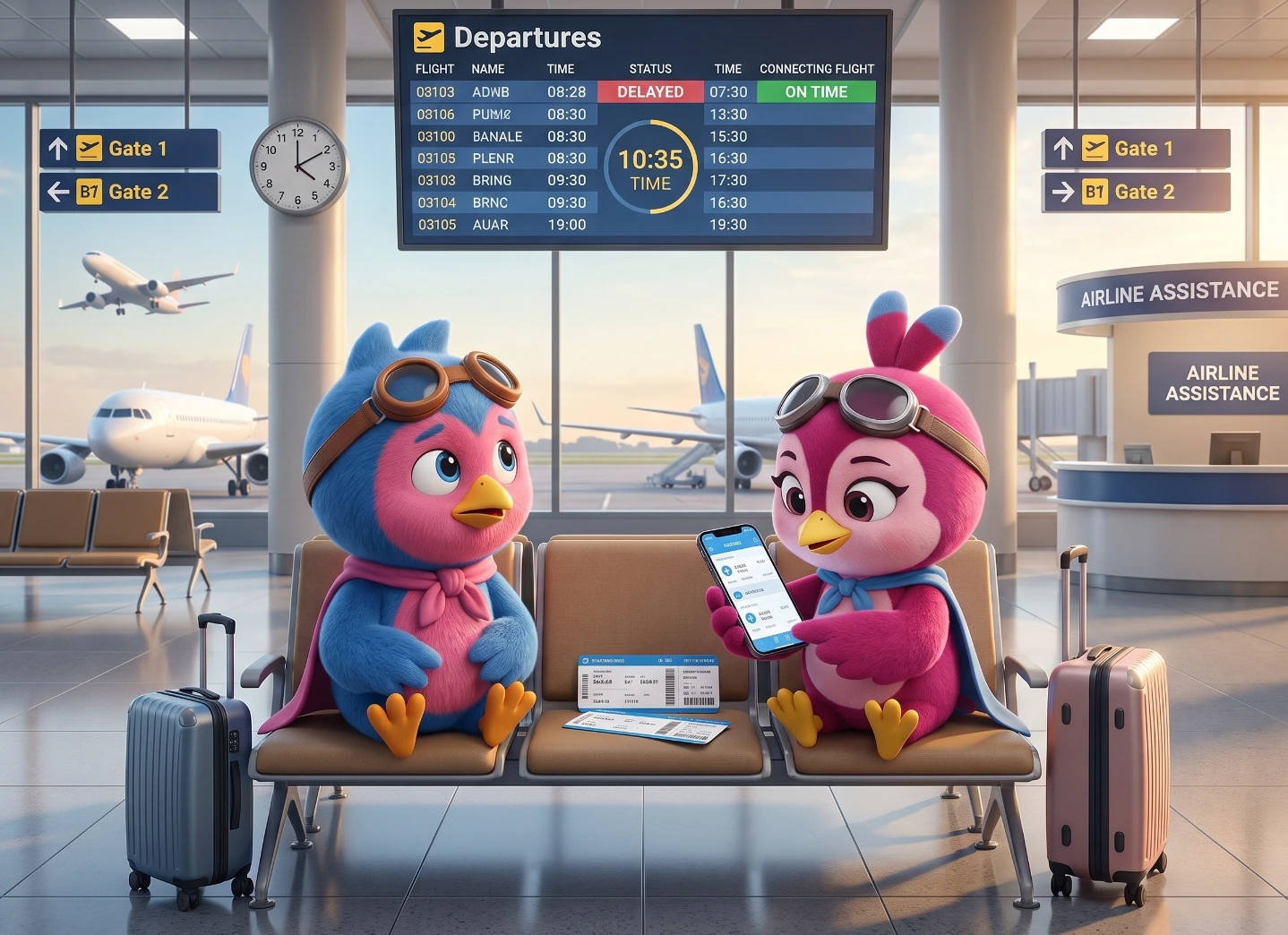
Passengers travelling with a connection should monitor the flight status particularly carefully. Even a relatively small change in departure time can reduce the time available between two flights.
First, check whether all flight segments were issued under a single booking or purchased separately. This may determine what options are available and what steps you should take.
If all segments are part of one booking and the first flight is delayed enough to put the onward connection at risk, contact an airline representative and ask how your journey will be handled.
If you hold separate tickets, the situation is different. Check the conditions of the second carrier yourself and find out as early as possible whether the onward booking can be changed.
Do not wait until you arrive at the connecting airport if it is already clear that the transfer time may be insufficient. The earlier you obtain the relevant information, the easier it will be to evaluate your options.
What to Do If Your Flight Is Cancelled

A cancellation differs from a delay because the originally scheduled flight will not operate. The passenger therefore needs to find out what options are available for the existing booking.
After receiving a cancellation notice, check the official notifications and contact an airline representative through the available communication channels. Ask whether an alternative flight is being offered and whether any additional action is required to confirm it.
If your trip is tied to a specific date, such as a business meeting, event, onward flight, or hotel check-in, assess immediately whether the proposed alternative still works for your itinerary.
Do not rush to buy a new ticket before you have clarified the status of the original booking and the options offered by the airline. Purchasing another flight immediately may result in additional expenses that could potentially have been avoided after checking the available alternatives.
Should You Arrive at the Airport Later If Your Flight Is Delayed?

A common mistake is to automatically postpone your arrival at the airport by the same amount of time as the announced delay. For example, if departure is moved by two hours, a passenger may decide to arrive two hours later.
You should not do this without confirmation. Check-in, baggage acceptance, and other pre-flight procedures may still follow the established schedule, while the expected departure time can change again.
If you learn about the delay before leaving for the airport, check not only the new flight status but also the required arrival time. If there is no confirmed information to the contrary, it is safer to follow the standard timing for check-in and other pre-flight procedures.
What to Do About Hotels, Transfers and Other Bookings

A significant delay or cancellation may affect more than the flight itself. If you have booked an airport transfer, car rental, excursion, or a hotel with restricted check-in hours at your destination, contact the service provider as early as possible.
Explain that your arrival time has changed and ask whether the booking can be adjusted. For example, it is useful to inform a hotel about a late arrival so that your reservation is not marked as a no-show.
If you have travel insurance, check the policy terms. Depending on the insurance programme, certain risks associated with transport delays or cancellations may be covered. The conditions and required supporting documents vary, so refer directly to your insurance contract.
Conclusion

A flight delay or cancellation is always stressful, but in most cases the situation can be managed. It is important to remember that schedule changes are not always caused directly by the airline. A complex combination of factors can affect operations, from weather and the technical condition of the aircraft to airspace congestion and delays to earlier flight sectors.
In such circumstances, passengers should avoid panic and focus on obtaining current information from official sources and communicating with the carrier in good time. Travellers with connections and those who have scheduled meetings or hotel check-ins should be especially attentive, because even relatively small changes may affect the rest of the itinerary.
Keep the following key rules in mind when a schedule disruption occurs:
- Recheck the flight status rather than relying only on the information printed on your boarding pass. Use airport displays, official airline channels, and information from staff;
- Do not automatically change the time you plan to arrive at the airport because of an announced delay. The departure time may change again, while check-in may continue according to the original or established schedule;
- If you have a connection, act early, especially when tickets were purchased separately. Do not wait until you reach the transit airport if you already know the connection may be at risk;
- If a flight is cancelled, first ask the airline about the available alternatives and only then consider buying a new ticket at your own expense. This may help you avoid unnecessary costs;
- Notify hotels and other service providers of your revised arrival time so that you can preserve your bookings and reduce the risk of losing money;
- Keep all relevant documents, including boarding passes and screenshots of notifications. They may be useful for insurance claims or other possible compensation procedures.
Your best allies in an unexpected travel situation are calmness and reliable information. Airlines and airports work to restore disrupted journeys, so do not hesitate to ask questions and clarify the details that affect your trip. If you have to wait longer than planned, use the extra time as practically as possible–for example, to review the next steps of your journey or simply rest before continuing your trip.
Become a guide to the world of travel


