


Uzbekistan • 25 May, 2026
Urgench the gateway to ancient Khiva
Located 35 kilometers from Khiva, Urgench is the administrative center of the Khorezm region. This is where many travelers arrive, choosing flights with Centrum Air to explore ancient Khorezm. It's a vibrant, modern city with markets, cafes, parks, and the usual urban bustle. Khiva, by contrast, is a place where time has practically stood still: a medieval city enclosed by fortress walls and listed as a UNESCO World Heritage site. The difference between them is fundamental, and it is this very contrast that gives the route its special charm.
Many travelers make the mistake of landing in Urgench, taking a taxi, and checking into their hotel in Khiva an hour later, without giving a second glance to the city that welcomed them. But Urgench is more than just a transit point. It is worthy of attention in its own right, as a living continuation of Khorezmian culture.
The road from Urgench to Khiva

For all its fame, Khiva lacks its own airport and a major railway hub. Urgench has taken on this role and has been handling it for several decades. The distance between the two cities is about 35 kilometers. A taxi can cover this distance in 35 - 45 minutes on a well-paved highway. The road is smooth, without any serious traffic jams, and passes through rural areas: on both sides are fields, gardens, irrigation canals, and occasionally villages with whitewashed houses and vineyards. Most tours of Khorezm start here. From here, it's convenient to travel not only to Khiva but also to the desert fortresses (Ayaz-Kala, Toprak-Kala, and others).
Urgench International Airport receives flights from Moscow, Istanbul, and other cities, providing tourists with direct access to the region without a layover in Tashkent. The Urgench railway station connects the city with Tashkent and Nukus. Trains run regularly, and the journey time from the capital is about 14 -16 hours – a convenient overnight route that allows you to save on a hotel and arrive refreshed in the morning.
What to See in Urgench
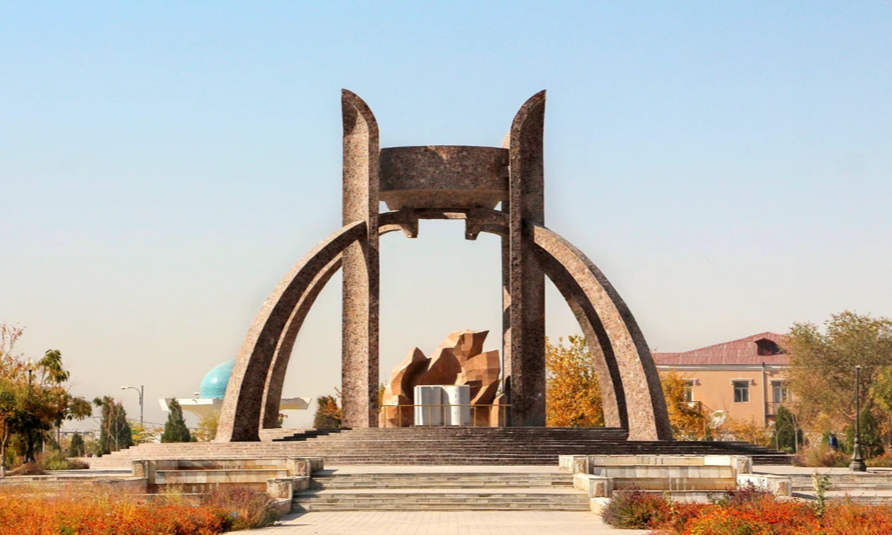
Urgench is a city with modern, predominantly Soviet-era architecture, but it has several attractions worthy of attention.
The Central Streets and Atmosphere of the City
Al-Khwarizmi Avenue and the embankments of the Shavat Canal are best for walking. Along them, you'll find well-maintained public gardens, recreation areas, cafes, and shops. In the central part of the city is the Park of Culture and Recreation – a green space with fountains and playgrounds popular among locals. It is also worth visiting the park named after Jalal ad-Din Manguberdi, which features a monument to the 13th-century Khwarazmshah. In the warm season, its landscaped embankment is also open.
"Avesta" Park Complex
A unique city attraction is the "Avesta" park complex, dedicated to Zoroastrianism, which flourished in the territory of Khorezm in ancient times. The park contains the Avesta Museum, as well as an 18-meter monument to the sacred book.
Local Cuisine and Khorezm Dishes
The culinary traditions of Khorezm differ significantly from the cuisine of other regions in Uzbekistan. The region is rich in fish from the Amu Darya river, so fish dishes hold a special place here. Other popular regional dishes include:
● Shivit oshi – green noodles colored with fresh dill;
● Suzma plov – a light pilaf made with suzma (strained yogurt);
● Tukhum barak – traditional dumplings with an egg filling.
One of the best places to experience the region's cuisine is the Gavhar restaurant in Urgench, which serves international food, including grilled common carp. Also, a new fish restaurant, "Ummon," opened in the Urgench district in 2026.
Bazaars and Local Flavor
Traditional markets like the Central Bazaar (Dexqon bozori) offer a wide range of goods: dried fruits, nuts, Khorezm sweets, national embroidery, and ceramics. You can also grab an inexpensive bite of traditional food at small cafes within the market. Among the souvenirs, embroidered skullcaps, silk scarves, carved wooden items, and ceramics with Khorezmian ornaments are especially noteworthy. Be sure to buy your spices at the Urgench bazaar – cumin, barberry, and saffron are sold by weight here and are several times cheaper than in Khiva's tourist shops.
Khiva: The Main Destination of the Trip
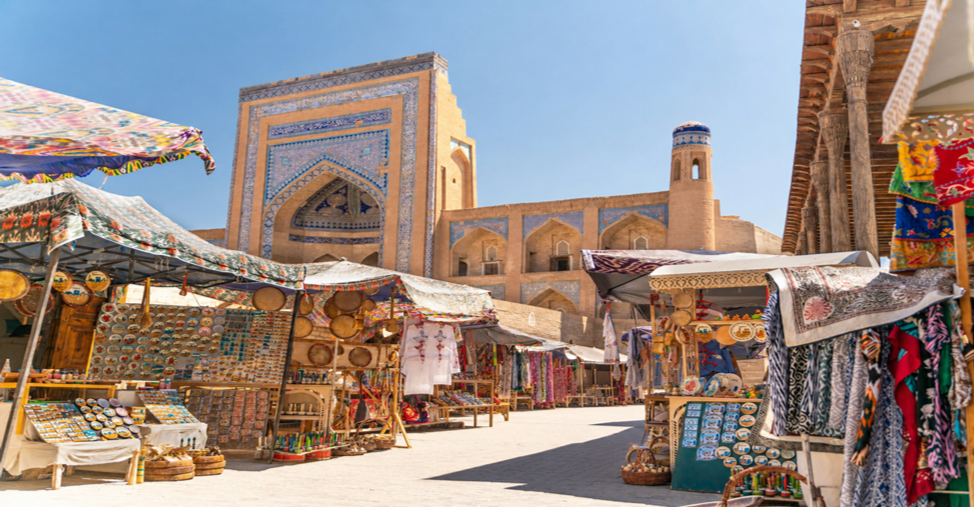
Khiva is one of the oldest cities in Central Asia and one of the few in the world where the medieval urban environment has been preserved in a virtually unchanged state. At its heart lies Ichan-Kala, an inner city enclosed by massive adobe walls approximately 2.2 kilometers long. This architectural reserve, covering an area of about 26 hectares, was added to the UNESCO World Heritage List in 1990.
The Ichan-Kala complex contains over 120 historical structures: minarets, mosques, madrasahs, caravanserais, bathhouses, and residential quarters. Most of the buildings have retained their original appearance, which is why Khiva is often called an "open-air museum" and the "city of a hundred domes." The city's layout, which took its final form by the end of the 18th century, has preserved not only individual monuments but also the very structure of a medieval Eastern city.
For centuries, Khiva was the capital of Khwarazm and the center of the Khivan Khanate. It was here in 783 that the great mathematician Muhammad al-Khwarizmi was born, whose name would later give rise to the word "algorithm."
Key monuments to see:
● The Kalta-Minar Minaret (meaning "short minaret") is the first thing that catches your eye upon entering. Commissioned in 1855 by Muhammad Amin Khan, it was intended to reach a height of 70–80 meters, but construction was halted by the ruler's death. Today, it stands at 26 meters tall with a base diameter of 14.2 meters. The glazed turquoise and blue tiling makes this unfinished minaret one of Khiva's most photographed landmarks.
● The Pahlavan Mahmud Mausoleum is the religious heart of the complex. The poet, wrestler, and saint who lived in the 13th–14th centuries and is venerated as the patron of Khiva rests here. The mausoleum, rebuilt between the 14th and 19th centuries, is distinguished by the exquisite majolica decor of its inner hall and its carved wooden columns. For locals, it is a place of pilgrimage; for visitors, it is an example of how popular veneration shapes a dominant architectural feature.
● The Muhammad Amin Khan Madrasah (1851–1855), the largest in Khiva, occupies the eastern side of the main square. Today, a hotel is housed within its walls – a rare instance of a historic building being adapted for tourism infrastructure without losing its authenticity. Opposite is the Muhammad Rahim Khan Madrasah (1871), which displays a collection of Khwarazmian manuscripts and documents.
● The Juma Mosque (Friday Mosque) is interesting for its archaic layout: a hall measuring 55 by 46 meters with a wooden roof supported by 213 carved columns. The oldest column dates to the 10th century and was brought from a ruined building of an earlier period. The absence of domes, facade embellishments, and elements typical of Islamic architecture makes this space unexpectedly austere and monumental;
● Tash-Hauli (stone courtyard) is a khan's palace from the 1830s, a labyrinth of halls, harem quarters, and reception rooms. Here, the ganch (alabaster plaster) carving technique and majolica panels with floral ornaments are particularly noteworthy. Unlike the grand complexes of Samarkand, Tash-Hauli retains a chamber-like, almost intimate atmosphere;
● Caravanserai and Bazaar – these former trading structures are now occupied by souvenir stalls. Even with the commercialization of these areas, one can still get a sense of the scale of the transit trade that passed through Khorezm.
Khiva is called an "open-air museum" for good reason. It does not compete with Samarkand in terms of grandeur or with Bukhara in the number of monuments. Its value lies in its integrity. Visitors see not scattered landmarks, but a complete medieval city where the minaret, palace, mosque, and residential quarters have preserved the interconnections lost in larger centers. This makes Khiva an object not so much for ticking a box on an itinerary, but for a thoughtful exploration of ancient architectural monuments.
Conclusion
Urgench and Khiva show different sides of Khorezm. Urgench is a bustling city center with markets, cafes, parks, and its usual rhythm of life. Khiva is a historic city-museum where the atmosphere of past centuries and the architecture of Ichan-Kala have been preserved.
Therefore, you shouldn't think of Urgench as just an arrival point before your trip to Khiva. Even a few hours in the city will help you get to know the region better: you can walk along the waterfront, stop by the Central Bazaar, try local dishes, or simply see the daily life of Khorezm off the beaten tourist path.
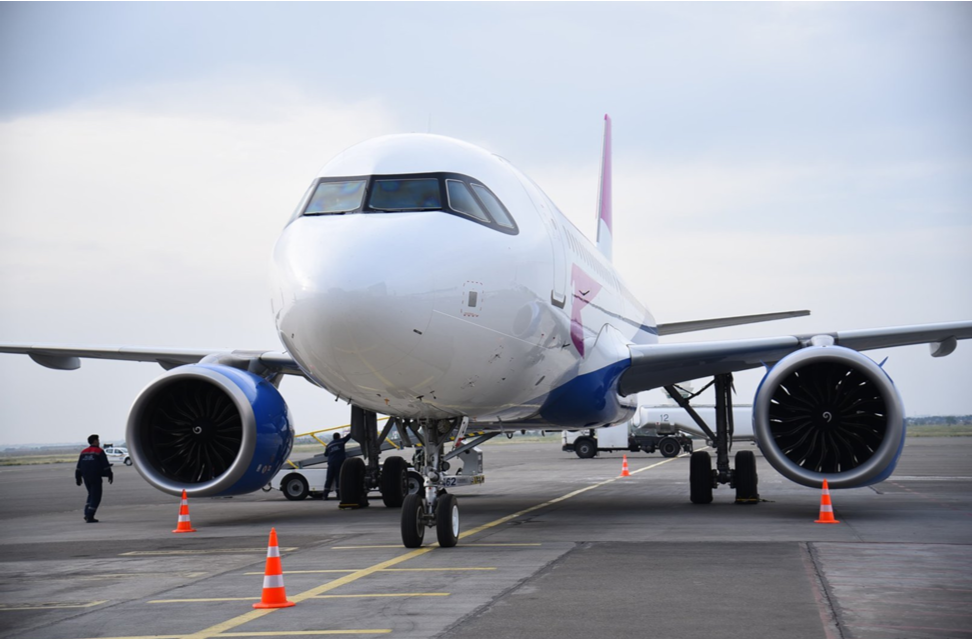
When planning their trip, many tourists choose Centrum Air flights to Urgench before continuing their journey to Khiva. This route allows you to visit two different cities without rushing and makes the trip more enriching.
For a first visit to Khiva, one day is usually enough, but if you want to leisurely explore the museums, madrasahs, and old quarters, it's better to set aside two days. The most comfortable time to travel is in the spring and autumn, when walking through Ichan-Kala is more pleasant than in the summer heat.
Become a guide to the world of travel


