


Adviсes • 19 February, 2026
Traveller's first aid kit: a complete list of essential item
Travelling is usually associated with relaxation, a change of scenery and new experiences. But in practice, health problems arise quite often when travelling – approximately every second tourist encounters them. The body reacts to unfamiliar food and water, hot climates, active lifestyles and changes in routine. This can result in digestive problems, minor injuries and cuts, allergic reactions, motion sickness, colds or sunburn. Such situations are especially common in popular tourist destinations with hot climates, such as Turkey and Egypt, where sudden changes in water, food, and conditions quickly make themselves felt.
The problem is that such troubles almost always happen suddenly: on the road, on an excursion, at night in a hotel, or at a time when the pharmacy is closed or far away. And it is in the first few hours that a traveller's first aid kit often proves more useful than insurance. An insurance policy is necessary for serious cases and hospitalisation, but it does not help to deal with pain, fever, poisoning or burns here and now. While you are looking for a clinic or contacting assistance, simple remedies from your first aid kit can relieve symptoms, stabilise your condition and buy you time. At the same time, there is no need to take everything with you — it is enough to prepare a set of really necessary and proven medicines in advance, which we will discuss further.
Basic universal list of a traveller's first aid kit
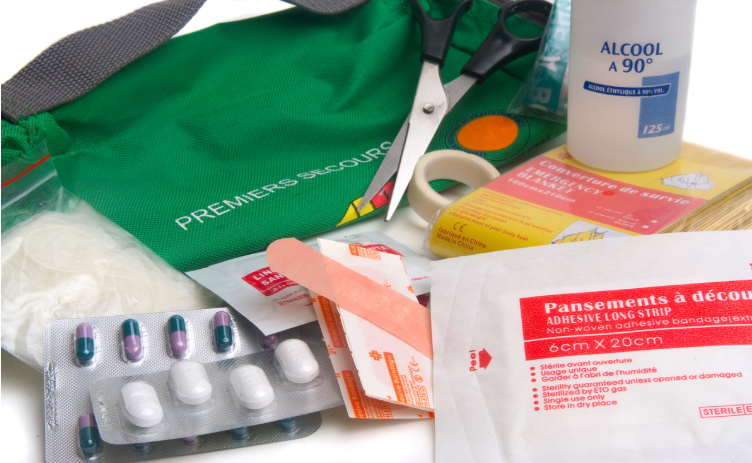
The basic kit is designed for the most common health problems, and it makes sense to take it with you on any trip — regardless of the destination, climate, and type of holiday. Preference should be given to remedies that are familiar to the body and do not cause side effects.
Bandages and antiseptics
● Plasters (regular and waterproof for blisters)
● Sterile and elastic bandages
● Cotton pads
● Antiseptic for wounds (chlorhexidine, miramistin in a small package)
● Iodine or green paint in pencil form
● Antibacterial wipes
Painkillers and fever reducers
● Ibuprofen (painkiller, anti-inflammatory, fever reducer)
● Paracetamol (alternative for fever)
● Antispasmodic (no-spa/drotaverine – for stomach cramps, menstrual pain)
Gastrointestinal problems (the most common category)
● Sorbents (Smecta, Enterosgel, Polysorb in sachets – for poisoning, diarrhoea)
● Anti-diarrhoea medication (Loperamide/Imodium – for emergencies when every minute counts)
● Antibacterial agent for intestinal infections (enterofuril/nifuroxazide)
● Enzymes (mezim, creon – for overeating, unfamiliar food)
● Rehydration agent (regidron – restores water-salt balance in case of dehydration)
● Probiotics (to restore microflora)
For allergies and bites
● New generation antihistamines (Cetrin, Zyrtec, Claritin – cause less drowsiness)
● Gel for itching and irritation (Fenistil gel – for insect bites, skin allergic reactions)
For motion sickness
● Tablets or patches (Dramamine, Avia-More)
● Natural alternative: ginger sweets or tea bags
For colds/ENT diseases
● Vasoconstrictor nose drops (in a small bottle)
● Throat spray or lozenges
● Universal cold remedies (such as Teraflu – to relieve symptoms)
For burns and sunburn
● Dexpanthenol spray or cream (Panthenol, Bepanten – for sunburn and household burns)
Additional items (recommended)
● Electronic thermometer (mercury-free)
● Disposable gloves, tweezers, small scissors (with rounded ends for transport)
● Tourniquet
● Ammonia spirit in ampoules (for dizziness, fainting)
With this first aid kit, you will be prepared for about 90% of possible ailments during your trip. Remember that this is a template: assess your health and route. For example, if you are not prone to motion sickness, feel free to exclude this category.
First aid kit for different types of travel
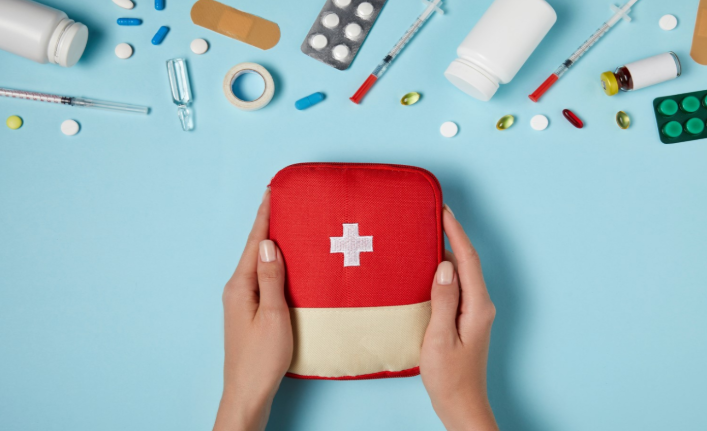
The basic set is a starting point, but the format of the trip itself almost always requires adjustments. Beach holidays have their own risks associated with sun and water; active itineraries involve increased stress on the joints and the likelihood of minor injuries; travelling with children requires specific dosages and forms of medication. These differences are not critical individually, but together they determine how useful the first aid kit will be in a real situation.
At the seaside and beach holidays
● Enhanced protection against sunburn: high SPF cream and after-sun lotion;
● For jellyfish and sea urchin stings: increase antihistamine intake;
● Ear drops (Otipax or similar) – for water in the ears and earache;
● Eye drops (Vizin, artificial tears) – for irritation from salt water, chlorine or sand.
In the mountains / active tourism
● Enhanced trauma care: 2-3 m elastic bandage, gel/ointment for bruises and sprains (troxevasin, diclofenac), haemostatic sponge;
● Insect repellent: powerful repellent for ticks and mosquitoes;
● Means for hypothermia: thermal blanket, warming packs;
● For the gastrointestinal tract: stronger sorbents are often added.
With a child (all medicines in children's dosage and form (syrups, suppositories))
● Antipyretics/painkillers: paracetamol and ibuprofen in syrup or suppository form;
● Antihistamines: drops (fenistil, zirtek);
● Vasoconstrictor drops: children's (Nazivin);
● Sun protection: cream with SPF 50+ and physical filter;
● Rehydration products (Humana Electrolyte, Regidron Bio);
● Zelenka/iodine in marker form – less traumatic.
For trips abroad and to exotic countries
● Study the restrictions: check the list of prohibited substances in the country of arrival;
● Take prescriptions: for all prescription drugs with Latin names;
● Consider analogues: find out the international non-proprietary names (INN) of your medicines so that you can buy analogues locally;
● Vaccination: visit an infectious disease doctor in advance (2-3 months) for vaccination recommendations (e.g., for yellow fever, typhoid fever).
Therefore, adapting your first aid kit for a specific trip is not a formality, but the final stage of preparation. It does not require serious effort or medical knowledge, but it allows you to cover typical risks in advance and reduce the level of uncertainty on the road.
Additional useful items
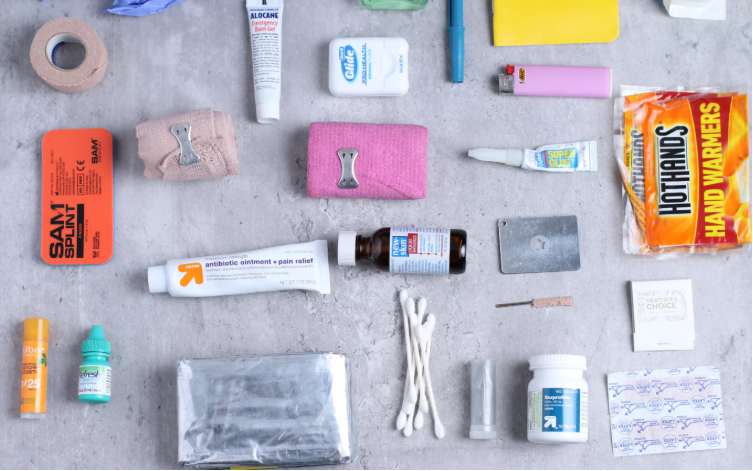
Even the most complete list of medicines may be ineffective if you do not take into account preventive measures and personal needs. The purpose of a first aid kit is not only to treat, but also to prevent possible problems. Often, it is these ‘non-medicinal’ items that save your holiday from minor but annoying inconveniences.
● Repellent and sunscreen are a must-have, not an option.
● Moisturising eye drops are a lifesaver in the air-conditioned environment of an aeroplane.
● Hand sanitiser and spare masks are standard hygiene items when travelling.
● Your personal medications for chronic conditions – enough for the entire trip plus a few extra days.
Don't forget that the most important part of your first aid kit is the medications you take daily as prescribed by your doctor. You need to calculate your supply of these particularly carefully.
Final recommendations
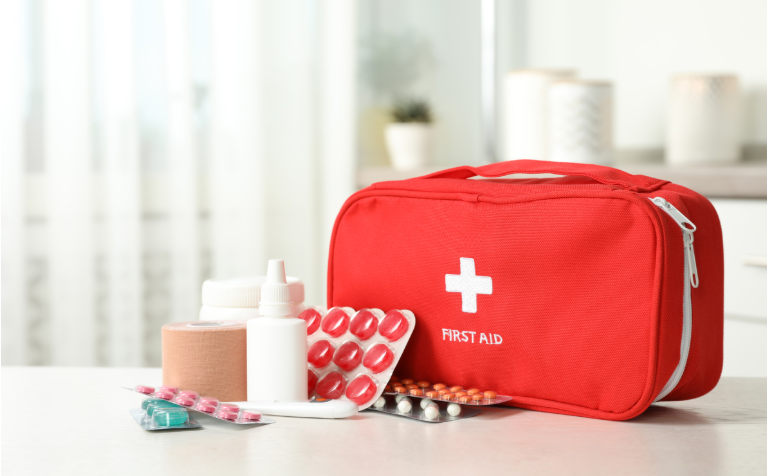
Even a well-chosen list of medicines is not guaranteed to be useful if the first aid kit is put together spontaneously or stored incorrectly. Mistakes most often arise not because of a lack of medicines, but because of expired products, inconvenient packaging, lack of prescriptions or ignorance of transport rules. On the road, such trifles quickly turn into real problems.
Below are the key rules that will help you put together a proper travel first aid kit:
1. Minimum and necessity. Your goal is to put together a light kit (300–500 g), not to transport your entire home first aid kit. Take only what you know how to use.
2. Expiration dates. Check each package. It is better to throw away expired items at home than to discover this at the wrong moment.
3. Proper packaging. Use an airtight, waterproof bag or cosmetic bag (a zip-lock bag will do). This will protect medicines from moisture, sand and leaks.
4. For hand luggage. All liquids (sprays, drops, gels) must be in containers of up to 100 ml and placed in a transparent plastic bag.
5. Prescription drugs. If you are taking any medication on a regular basis, take a supply with you. Carry your prescription (or a certified English translation) and a receipt from the pharmacy to confirm legal purchase.
6. Prohibited drugs. Find out the rules for importing drugs into your destination country, especially if you are planning a trip to Dubai. A number of countries also prohibit the import of Corvalol, Valocordin, and certain strong painkillers and sleeping pills without special permission.
The rules for transporting first aid kits depend on the type of transport. Airplanes have the strictest restrictions, which are best to find out about in advance. It is important to clearly distinguish between the rules for liquids and prescription drugs. The former are strictly regulated, while the latter require documentary evidence. Prepare the necessary paperwork in advance so that you can pass through security quickly and confidently.
A traveller's first aid kit is part of sensible preparation for a trip, not a sign of excessive caution. It allows you to deal with typical ailments without unnecessary fuss and not be distracted from your holiday by minor but unpleasant situations. This article is a useful guide when packing: adapt the list to the format of your trip and cover the basic risks in advance, without leaving your preparations to the last minute.
Become a guide to the world of travel


