


Adviсes • 25 August, 2026
How last-minute tours differ from standard tours
Planning a trip involves more than choosing a country, hotel, or flight format. The final cost of a holiday is also affected by how far in advance you book, the payment terms, and the availability of seats and rooms. Some travellers prefer to set their holiday dates well in advance, choose the most suitable room, and prepare for the trip at a relaxed pace. Others are willing to make a decision only a few days before departure in exchange for a more attractive price.
For this reason, travel offers are commonly divided into standard packages and last-minute tours. Standard tours provide greater freedom when choosing holiday conditions, while last-minute offers can deliver substantial savings but require flexibility and quick decisions. Below, we explain how these formats differ, their main advantages and disadvantages, and when it is better to book in advance.
Standard Tours

A standard tour, often sold in the industry as an Early Booking product, is a traditional holiday package purchased approximately two to six months before the planned departure. In this case, customers generally have the widest choice of components and can secure the price at the time of booking: an advance payment, usually around 10% to 30%, fixes the tour price and can protect the traveller from exchange-rate fluctuations and seasonal price increases. The tour operator also has sufficient time to send requests and obtain written confirmations from hotels, reducing the risk of refusal. This format is particularly well suited to family holidays and trips planned around public holidays.
Advantages of standard tours:
- A wide range of accommodation. Travellers can choose from the full hotel catalogue, from budget 3-star city hotels and family properties with children's clubs to exclusive 5-star Deluxe resorts. There is time to examine the layout, facilities, and recent guest reviews in detail;
- Greater choice of room types. Specific categories can be booked in advance, including two-room Family Rooms, villas with direct pool access (Swim-Up), Sea View rooms with guaranteed views, and a broad range of meal plans, from BB breakfast to Ultra All Inclusive;
- Transparent pricing and financial flexibility. The tour calculation clearly shows the cost of each component, and early-booking campaigns may include substantial hotel discounts. Instalment-style payment, with the balance paid closer to departure, can also make it easier to plan a family budget;
- Higher booking certainty. When a reservation is made well in advance, the hotel has more time to confirm it in its own system, which reduces the risk of last-minute availability issues.
Disadvantages of standard tours:
- Strict cancellation terms and penalties. If plans change or a trip is cancelled shortly before departure, the tour operator may apply substantial cancellation charges, potentially up to the full package cost depending on the contract and any cancellation insurance;
- Funds are committed in advance. Because a deposit may be required months before departure, part of the travel budget is tied up for a relatively long period;
- A possible price difference compared with spontaneous discounts. Early booking often provides competitive rates, but occasionally a special offer for the same hotel may appear closer to departure.
Despite strict cancellation rules and the potential penalties associated with a forced cancellation, traditional early booking remains one of the most predictable options for travellers with fixed holiday schedules. Staged payments can make budgeting easier, while advance hotel confirmation reduces the risk of unpleasant last-minute surprises. This certainty is one of the main reasons standard tours remain popular among people who value a calm and predictable holiday.
Last-Minute Tours
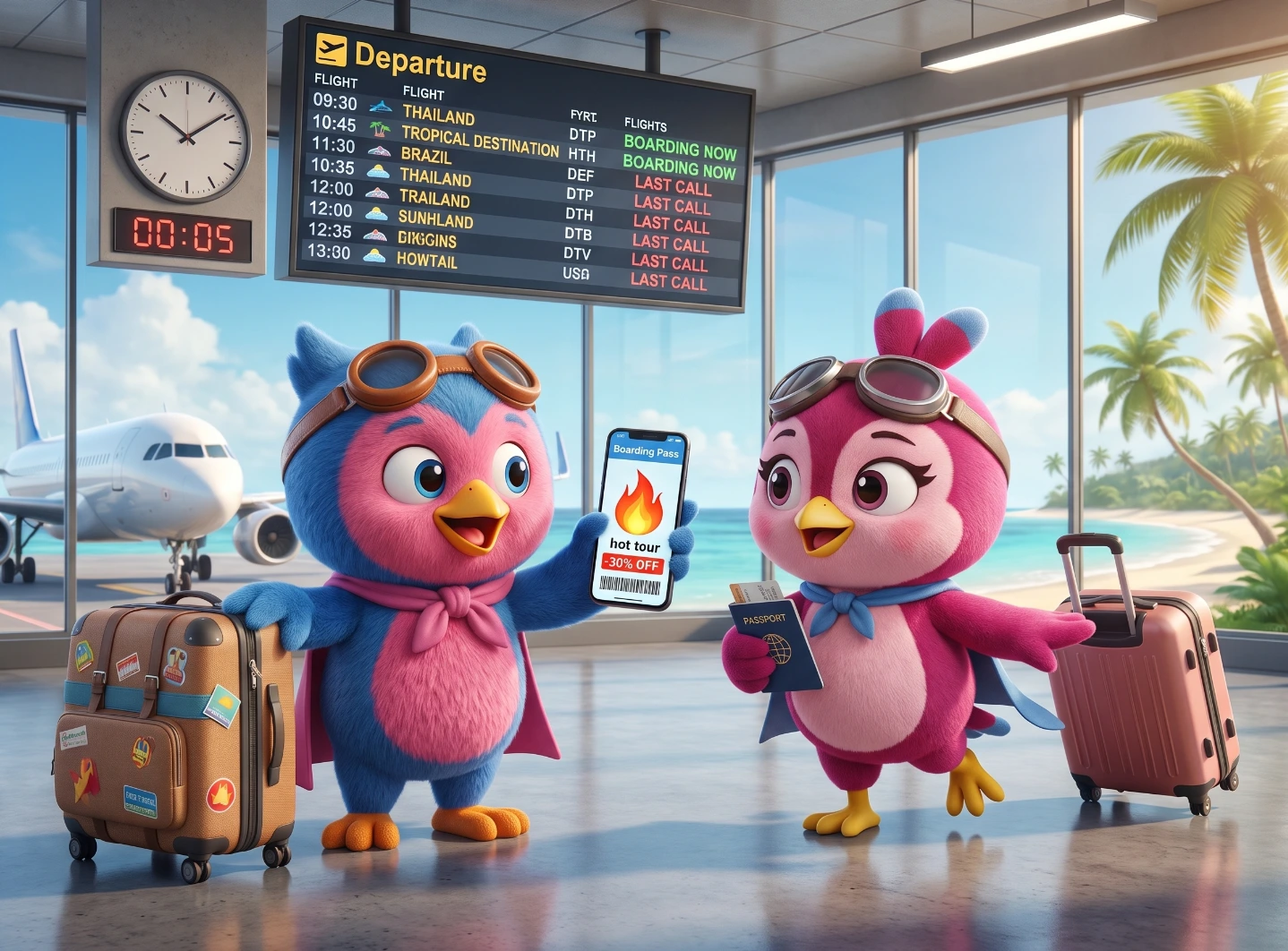
A last-minute tour is not a defective product; it is a pricing mechanism used by tour operators to reduce losses on unsold capacity. When only three to seven days remain before a charter flight and seats or pre-purchased hotel rooms are still available, the operator may sharply reduce the package price. The logic is straightforward: selling the remaining capacity at a significant discount may recover at least part of the money already committed to the aircraft and accommodation. Such offers can appear unexpectedly and may remain available only briefly, until the remaining inventory is sold.
Advantages of last-minute tours:
- Maximum potential savings. The main advantage is the opportunity to purchase a complete package at a substantial discount compared with its original price and travel abroad on a smaller budget;
- A higher-category hotel for less. During lower-demand periods, discounted availability may occasionally appear at good 4- and 5-star hotels that would otherwise be considerably more expensive;
- Spontaneity and excitement. The format suits travellers who enjoy quick decisions, can pack at short notice, and do not want to spend months comparing every possible option;
- A very short wait before departure. Only a few days may pass between booking and the start of the holiday.
Disadvantages of last-minute tours:
- An extremely short decision window. There may be only 24 to 72 hours between the appearance of an offer and departure. There is little time to arrange leave from work or obtain a visa, so all essential travel documents should already be ready;
- Limited accommodation choice. Last-minute inventory is restricted to what remains available, so travellers may have fewer options in terms of location, room type, facilities, or hotel concept;
- Strict payment and documentation terms. Documents may be issued shortly before departure, while payment is typically required in full at the time of booking;
- Higher risk of substitutions and less flexibility. In a fast-moving booking environment, availability can change quickly. If a hotel cannot confirm the reservation, the tour operator may, depending on the contract, offer an alternative property of the same category, which may differ in location or other characteristics.
It is important to understand that last-minute tours are best suited to highly flexible travellers who are not tied to a specific hotel, date, or resort. During peak periods, such as July, August, or the New Year holidays, genuine last-minute bargains may be far less common because demand is already high. In shoulder seasons, however, the format can sometimes make it possible to travel to a good resort at a significantly lower price. The key requirement is readiness: documents, luggage, and the funds needed for immediate payment should all be available.
Conclusion

The choice between a standard tour and a last-minute tour depends directly on your priorities, personality, and the type of holiday you are planning. Traditional early booking is ideal for travellers who value predictability, travel with family members, or have specific requirements regarding hotel category and service. Last-minute offers, on the other hand, may be a good choice for flexible travellers who are ready to depart at short notice in exchange for potential savings. To make the right decision, it helps to answer a few practical questions honestly and compare the chosen format with your real expectations.
Before booking, consider the following:
- How fixed are your holiday dates? If your leave has already been approved and cannot be moved, it is safer not to rely on a suitable last-minute offer appearing. A standard tour allows you to select specific departure dates and confirm accommodation in advance;
- Do you have strict hotel requirements? Families with children and travellers with specific needs regarding meals, location, room type, or facilities are generally better served by booking early. Last-minute offers are limited to whatever remains available;
- Are you willing to change your destination? Searching for the lowest price works best when you can consider several countries, resorts, and dates. If you need one particular city or hotel, the chance of finding a suitable last-minute option is much lower;
- Can you prepare documents and pay quickly? A last-minute tour requires a valid passport, any necessary visa, and the ability to pay the full amount immediately. Sometimes only a few days separate booking from departure;
- When are you planning to travel? During public holidays, school breaks, and the peak summer season, popular hotels and convenient flights are often booked in advance. Waiting until the last minute may result in less choice rather than a lower price;
- How important is the final budget? When comparing offers, look not only at the headline tour price but also at what the package includes: baggage, transfers, meals, insurance, hotel location, and possible extra expenses at the destination.
If most of your answers indicate that you need to know the exact dates, hotel, and accommodation conditions in advance, a standard tour is likely the more practical choice. If you can change plans freely, pack quickly, and are comfortable choosing from a limited number of options, a last-minute tour may offer good value. In either case, compare not only the price but also the package contents, cancellation terms, and potential additional expenses before paying. This helps ensure that savings do not come at the cost of compromises that could affect the quality of your holiday.
Become a guide to the world of travel


