


Adviсes • 24 March, 2026
Five safety rules for a tourist in a foreign city
The journey begins long before the plane takes off - from the moment of planning. We carefully select flights, compare hotels, and compile lists of attractions, but in this pleasant hustle, it's easy to overlook personal safety issues. Meanwhile, peace and confidence in a foreign city is not luck, but the result of simple preparation. Knowing a few basic rules will help you avoid unpleasant situations and focus on the main thing - the vivid impressions of the trip. Centrum Air accompanies you from your flight check-in to your baggage at the arrival airport. But our concern for your comfort doesn't end in the arrival zone. That is why we have prepared this manual. It contains five key safety rules that will help you avoid common problems and fully focus on what you set out for - getting new, vibrant, and positive experiences.
Rule 1. Preliminary route planning and digital preparation

The basis of safety in any trip is awareness. The better you imagine the geography of the district and the location of key facilities, the more confident you will feel when you go outside. Modern technologies provide us with all the possibilities for this, the main thing is to use them wisely and not rely on unstable mobile internet in roaming.
Route planning recommendations:
● Use apps with offline maps. Before departing or in a hotel with stable Wi-Fi, upload a map of the city to your smartphone's memory. The most reliable assistants here are Google Maps (available for downloading individual districts) and the specialized Maps.me app, which is initially confined to work without internet access;
● Mark key points in advance. Don't limit yourself to hotel and central station markings. Create a list of important security locations in the app and mark them on the map. This list must include: your country's embassy or consulate, nearest 24-hour pharmacies, city hospitals or trauma centers, and police offices;
● Examine the routes to your sights. Set aside 10-15 minutes in the evening to lay out a walking or transport route to the places you plan to visit the next day. Pay attention to key turning points, street names, and notable buildings.
These simple actions pursue not only a practical but also a psychological goal. When you move confidently along the street, not stopping every five minutes to pick up your phone and check the route, you don't attract excessive attention to yourself. You don't look like a "lost tourist," meaning you automatically fall out of the category of easy targets for pickpockets and street scammers.
Rule 2. Rational distribution of finances, documents, and valuables
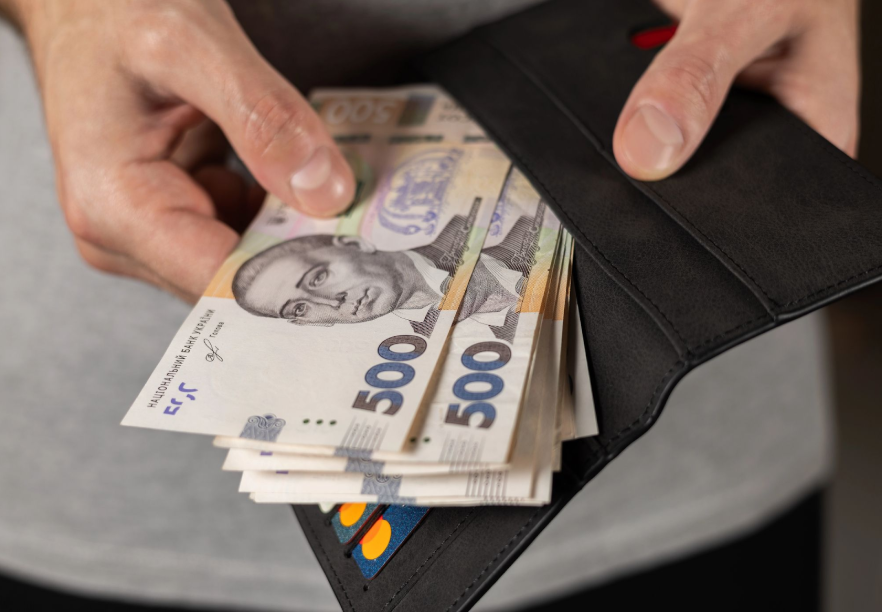
Losing all your cash or, worse, your foreign passport thousands of kilometers from home is one of the most unpleasant scenarios for a traveler. The situation is complicated by language barriers, ignorance of local regulations, and the urgent need to contact the consulate. Fortunately, the risk of such a problem can be significantly reduced if you follow a simple rule: don't put everything in one basket. If you distribute the money and documents to different places, a backup option appears in case of trouble. Even if you lose one part, you still have resources to calmly solve the problem.
Financial security recommendations:
● Main reserve (base). These are your primary assets and primary documents. This includes: a large amount of cash that you are not planning to spend in the coming days, all bank cards (except one), as well as a foreign passport. The place of this level is exclusively a safe in hotels or apartments. Make sure the safe is securely closed and, if possible, secured to the wall or floor. Never carry a foreign passport without extreme necessity - it is enough to have a color copy or a photo of the return with a visa;
● Day stock (operational level). These are the funds you go out with directly. Ideally, this should be a small amount of cash calculated for current expenses (transportation costs, water purchases, light snacks, museum tickets), plus one bank card. It's better to keep the card not in the same pocket with the cash, but in a separate place, for example, in the inner pocket of a jacket or bag. Try not to show your wallet contents at the checkout by pre-preparing the desired banknote;
● Immunity (IM). This is your "Plan B" for force majeure. Imagine the situation: you have a bag with a day's worth of money and a card stolen. What to do? If you have NS, the panic will subside. It can be 100-200 dollars or euros (depending on the country), hidden in a safe place: in the inner secret pocket of the backpack, in a special money belt under the clothes, or even behind the shoe lining. This money isn't meant for everyday expenses - it's just for an emergency, to get to the hotel, call the bank, and wait until the problem is solved.
Before departure, be sure to take photos or scan copies of your passport (photo pages and visa pages), all air tickets, and hotel bookings confirmations. Send this set of files to your email and save them to cloud storage (Google Drive, iCloud, Yandex.Disk). In case of loss of documents, these files will become your life support. Firstly, they will help you quickly recover data for the police report. Secondly, they will serve as proof of your identity when applying to the consulate and significantly expedite the process of issuing the entry certificate.
Rule 3. Observance of local norms, traditions, and rules of conduct

In a new country, it's easy to fall into the trap of one's own habits. We often evaluate people's behavior through the prism of our culture, forgetting that rules and norms in different countries can vary greatly. What you consider normal politeness might seem rude somewhere, and a tourist's harmless gesture can sometimes cause misunderstanding.
Respect for local traditions is not only a matter of etiquette, but also of safety. When a person follows local rules, they gain more trust and attract less negative attention. Thanks to this, the risk of conflicts with local residents or authorities is significantly reduced.
Recommendations for adapting to local culture:
● Examine basic cultural characteristics. Spending just 15-20 minutes reading the guide before traveling will help avoid embarrassing situations. Pay attention to the local dress code. For example, in Thailand, Indonesia, or Cambodia, open clothing - shorts, short skirts, and t-shirts - is prohibited when visiting temples. Similar rules apply in Middle Eastern countries, such as the UAE. In some European countries, such as Italy or Spain, too revealing attire may be prevented from entering cathedrals. This is a rule of respect for local culture;
● Learn about photo and video shooting rules. This is one of the most common stumbling stones. In some countries, it is strictly forbidden to photograph military and strategic facilities, which is logical. But also, filming in museums (especially with a flash), in the metro, and even without the consent of local residents is often prohibited. In African or Amazonian tribal cultures, the belief that photography steals the soul is still alive, and attempting to photograph a person can be perceived as aggression;
● Pay attention to non-verbal communication. Gestures that we use automatically may have the opposite meaning abroad. The familiar "okey" (thumb and index finger in the ring) in Brazil or Turkey is a rude insult. The thumb raised up in some Middle Eastern countries also has a ambiguous interpretation. It's better to use an open palm or just a smile for communication - it's understandable without translation anywhere.
Even with good preparation, unexpected situations can arise during the trip. If you get lost or can't find the right address, the main thing is not to panic or show confusion on the street. It's best to go to the nearest cafe, pharmacy, store, or hotel lobby and, already in a calm atmosphere, check the map, connect to the local Wi-Fi, and plan your next steps. If you need to ask for directions, contact police officers, employees of establishments, or families with children.
Rule 4: Monitoring personal belongings and maintaining communication
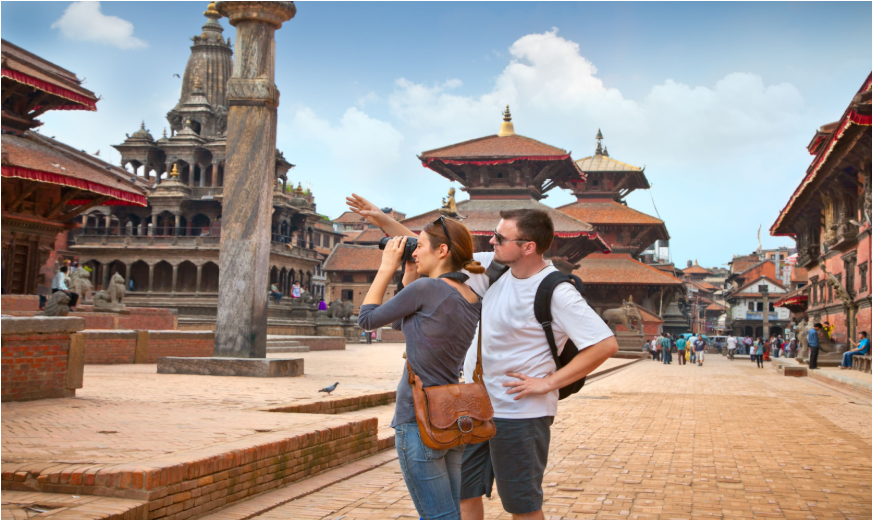
In transport, at train stations, at popular attractions, and at mass events, a tourist's attention is often distracted. We look around, take pictures, and discuss what we see - and it's at such moments that pickpockets work. They act quickly and imperceptibly, so the disappearance is not immediately noticeable. Therefore, it is important to be attentive and follow simple safety rules.
Things safety recommendations:
● Wear backpacks and bags correctly. In crowded places, the backpack should be hung not on the back, but on one shoulder or front. Always hold the bag over your shoulder with your hand, pressing it to your chest, especially in transport. Never hang a bag on the back of a chair in a cafe or restaurant - leave it on your knees or thread the strap into the chair leg;
● Don't let your phone out of the control zone. The smartphone is the primary target for street thieves. Do not put it in the back pocket of your pants or the outside pocket of your backpack. Don't leave it on a table in a street cafe when you're distracted by conversation or food. Use the inner pockets of your jacket or the front pockets of your pants/jeans for your phone. If you need to quickly look at the map, move away from the flow of people and stand with your back to the wall to avoid the possibility of snatching your phone and running away;
● Be vigilant in transport. Metro, buses, and especially tourist shuttles are areas of increased risk. At the moment of landing or exiting, a thrust is created, ideal for the work of pickpockets. At this moment, be as focused as possible, hold the bag in front of you, feel where your wallet and phone are. Don't react to artificially created noise or commotion - this is a classic distracting maneuver.
Make sure your power bank is always charged and in your backpack. During a trip, the load on the smartphone's battery increases many times over: constant GPS work, taking photos, searching for information on the internet. An external battery with a capacity of 10,000 mAh or higher will guarantee that you won't be left without a connection by evening. In addition, even before departure, make a list of emergency numbers and save it not only in your phone's memory but also on paper (put it in different baggage compartments). The universal number 112 operates in most European countries, but some countries have their own police or ambulance numbers. Be sure to find out if there is a specialized tourist police in the country you are flying to. Usually, such departments have employees who speak English and other languages, and their contact information can be easily found on tourist portals.
Rule 5. Moderation, responsibility, and social awareness

This rule applies not only to safety but also to the overall quality of the journey. Rest is often associated with relaxation, and many allow themselves more alcohol than usual. However, in an unfamiliar city, this can lead to unpleasant consequences. A clear head helps to better assess the situation, notice possible risks, and make the right decisions, while alcohol dulls attention.
It's not about completely abstaining from alcohol, but about a reasonable measure. When you keep control of yourself, you control the situation better. If control is lost, circumstances can easily slip out of control.
Personal responsibility recommendations:
● Control alcohol consumption. In an unfamiliar city, the effects of alcohol may be unpredictable due to climate change, acclimatization, and unfamiliar food. Even your usual norm can hit your head harder than usual. Remember that light intoxication dulls the vigilance, and strong intoxication makes you completely vulnerable. The risk of getting lost, getting into a fight, getting robbed, or simply losing documents increases exponentially;
● Do not accept drinks from strangers. This rule applies worldwide, from noisy megacities to quiet resort towns. If someone approaches you at a bar or club and offers a drink, politely but firmly decline or ask the bartender to prepare the drink in your presence. Cases of using sleeping pills or psychotropic substances in tourist destinations are still not uncommon;
● Keep an eye on your glass. If you're still in a bar and dancing, never leave your drink unattended on the counter or table. If you get distracted and lose sight of the glass, order a new one.
Safety in a single trip or even in a company requires another important element - social awareness. It's about someone outside your trip knowing where you are. Make it a habit to share your plans with someone close to you or friends every day. It could be a simple message in a messenger: "Today we are going to the National Museum, then to the old neighborhood." Modern technology makes this self-care even easier. Share Location on WhatsApp, Telegram, or special tracker apps (e.g., Life360) allows an authorized representative to see your location in real time within a specified timeframe. If something happens to you and you don't get in touch, your loved ones will know where to look for you and can quickly contact the local services or the consulate.
Conclusion
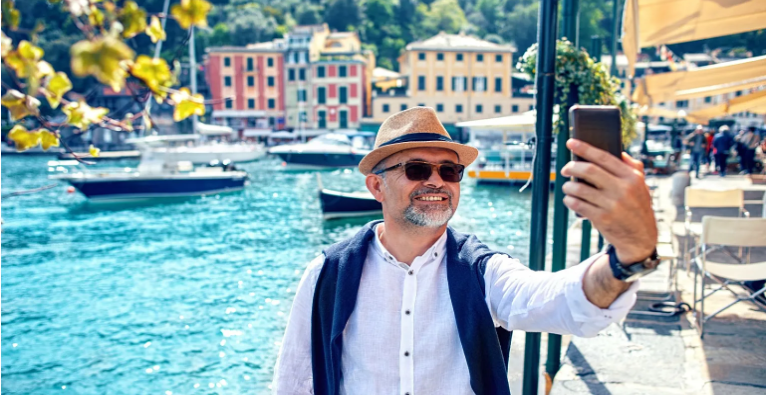
Safety in travel is not a set of prohibitions or a cause for anxiety. This is primarily a system of simple and logical habits that can be easily integrated into any vacation scenario. Planning the route in advance, wisely allocating funds, respecting another's culture, being attentive to things, and moderating habits - these five pillars create the foundation upon which truly peaceful and comfortable recreation is built.
Short checklist of a tourist in an unfamiliar city:
1. Plan your route in advance. Download an offline map, mark hotels, embassies, hospitals, and other important points;
2. Share money and documents. Keep your assets in a safe, take only daily supplies with you, and keep a small reserve in case of force majeure;
3. Respect local rules and traditions. Learn basic etiquette, dress code, and photography rules;
4. Monitor your items and phone. In crowded places, keep your bag in front of you, don't leave your smartphone unattended, and be careful in transportation;
5. Maintain moderation and keep in touch. Control your alcohol consumption, avoid unfamiliar drinks, and share your plans with your loved ones.
By spending a little time preparing at home or in a hotel room, you minimize possible risks and get the most important thing - the opportunity to let go of the situation and fully immerse yourself in the atmosphere of the new city. Nothing should distract you from the architecture of ancient streets, the scents of local cuisine, and the joy of new discoveries.
Become a guide to the world of travel


